KARIBA - A month ago today, on 11 August, the Mbuya Nehanda left Andora Harbour for the Chalala fishing camps. About 30 minutes into the journey, according to Pindula News, rough water breached the deck, submerged the bilge pump and stalled the engines. The ferry capsized. Ninety-seven people died.
Police confirmed the figure on 20 August, after two more bodies were recovered. “The Kariba RIDA Boat accident death toll is now 97 after the recovery of two bodies from the lake this afternoon,” the Zimbabwe Republic Police said, as reported by Nehanda Radio. Rescuers saved 77 people. Divers recovered bodies from depths of up to 80 metres.
President Emmerson Mnangagwa has declared the accident a national disaster and acknowledged that it exposed “serious deficiencies” in the country’s maritime safety capabilities.
How many were aboard
The number of passengers is the first question, and it has kept changing. The government has said the ferry was allowed to carry 95 people including crew; Nehanda Radio reported a stated capacity of 90 passengers, excluding crew. Police initially said there were 90 passengers and five crew on board. Preliminary findings presented to Cabinet put the figure at more than 170 passengers, or by another account as many as 180, along with heavy cargo.
GroundUp, publishing an investigation by the news agency Pachena, put it plainly: the exact number is unknown, but there were at least 174. The ticket list for the final voyage, it reported, had no details for the children on board. Their tickets were left blank.
A cartoon at the time imagined a government information desk under the motto “Controlling The Narrative”, asked for the final figures and replying with a question: the correct ones, or the official ones? It is satire. The shifting numbers are not.
The warnings
The second question is why the Mbuya Nehanda sailed at all. Pindula News reported that investigators allege the ferry was allowed to depart despite severe weather warnings from the Meteorological Services Department about the strong south-westerly winds known locally as the Binga Wave. Survivors have said they begged the crew to turn back or shelter at nearby islands, and that they were ignored.
According to GroundUp, engineers from KB Engineering, the firm that serviced the vessel, had repeatedly warned that it needed structural work, including two additional pontoons, to improve its stability. The Mbuya Nehanda, one of three ferries bought from Denmark in 1985, nearly capsized in December 2024 after its engines failed, and again in January 2026 when its boarding ramp broke away.
The officials disagree. Lameck Chitenga, Director of Inland Waters Control, rejected the engineers’ assessment. “I say so because the vessel, even up to now, it has not sunk completely in the lake. It is still floating,” he told Pachena. RIDA Director General Christopher Shumba dismissed the recommendations as “speculation”.
A hull that stays partly afloat after 97 deaths is, it should be said, a low bar for seaworthiness.
Who is to blame
Minister Daniel Garwe, at a post-Cabinet briefing on 18 August, blamed the captain, Sign Patsikadova, who died in the disaster. The state-owned Rural Infrastructure Development Agency, which operated the ferry, reports directly to the Office of the President and Cabinet.
So far one person has been charged. Ignitious Chiome, the Kariba district clerk and acting RIDA district head, appeared before the Kariba Magistrates’ Court on 26 August charged with culpable homicide. The State alleges that administrative failures, overloading and breaches of operational safety procedures contributed to the accident. GroundUp reports that he has since been released on bail and has not pleaded.
The wreck was pulled from the water and towed ashore in late August, ahead of schedule, so investigators can examine it. Cabinet has announced a commission of inquiry.
The cost of the lake
For the communities around Kariba, the ferry was not optional. GroundUp reported that the crossing from Kariba to Mola takes six to seven hours and costs about US$15, against two days and US$30 by road. The Mbuya Nehanda carried villagers, fishermen, traders, teachers and nurses.
Kariba’s MP, Shine Gwangwaba, had called a meeting with RIDA after the January incident to press for rescue boats. He later lost 16 relatives, including his sister, in the disaster.
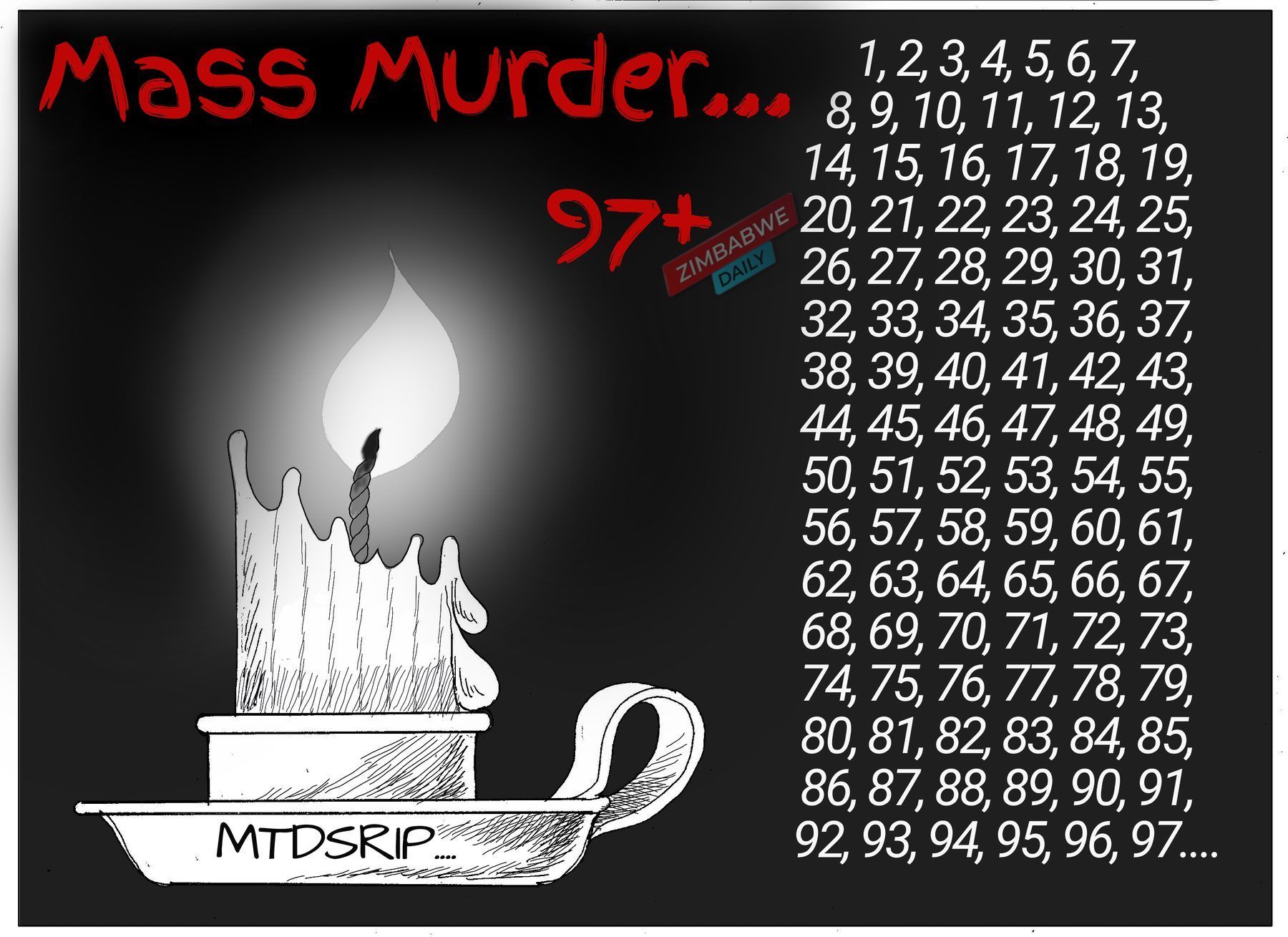
The cartoon of a single candle beside a column of numbers counting to 97 needs no caption. The inquiry, when it reports, will need a great deal more.