Zimbabwe’s 2026 trophy-hunting season is projected to earn about US$20 million for a country desperate for foreign currency.
But where that money goes, and who controls access to it, has become one of the ugliest stories in Zimbabwean wildlife management.
Zimbabwe Parks and Wildlife Management Authority (ZimParks) says the industry is strictly regulated, with quotas set through scientific wildlife assessments. More than 100 hunting permits are issued annually for elephants, lions, leopards and buffalo. The hunting season runs from March to November, with the United States accounting for more than 60 percent of clients.
“It is important to mention that the revenue we are getting is from trophy hunting, daily rates, and also incidentals,” said Mrs Roseline Mandisodza, ZimParks chief ecologist (terrestrial). “In 2026, we are projecting to get about US$20 million as a country from the hunting industry.”
Yet a case reported on 16 April 2026 exposed how wildlife trophies are traded outside official channels. Ernest Nhamburo, a 51-year-old village head from Chiweshe, appeared before Harare magistrate Lisa Mutendereki after police found him in the capital’s central business district with a baboon skull and two leopard cub skins valued at US$40,500. He was fined US$200 after pleading guilty to unlawfully possessing animal trophies without a permit.
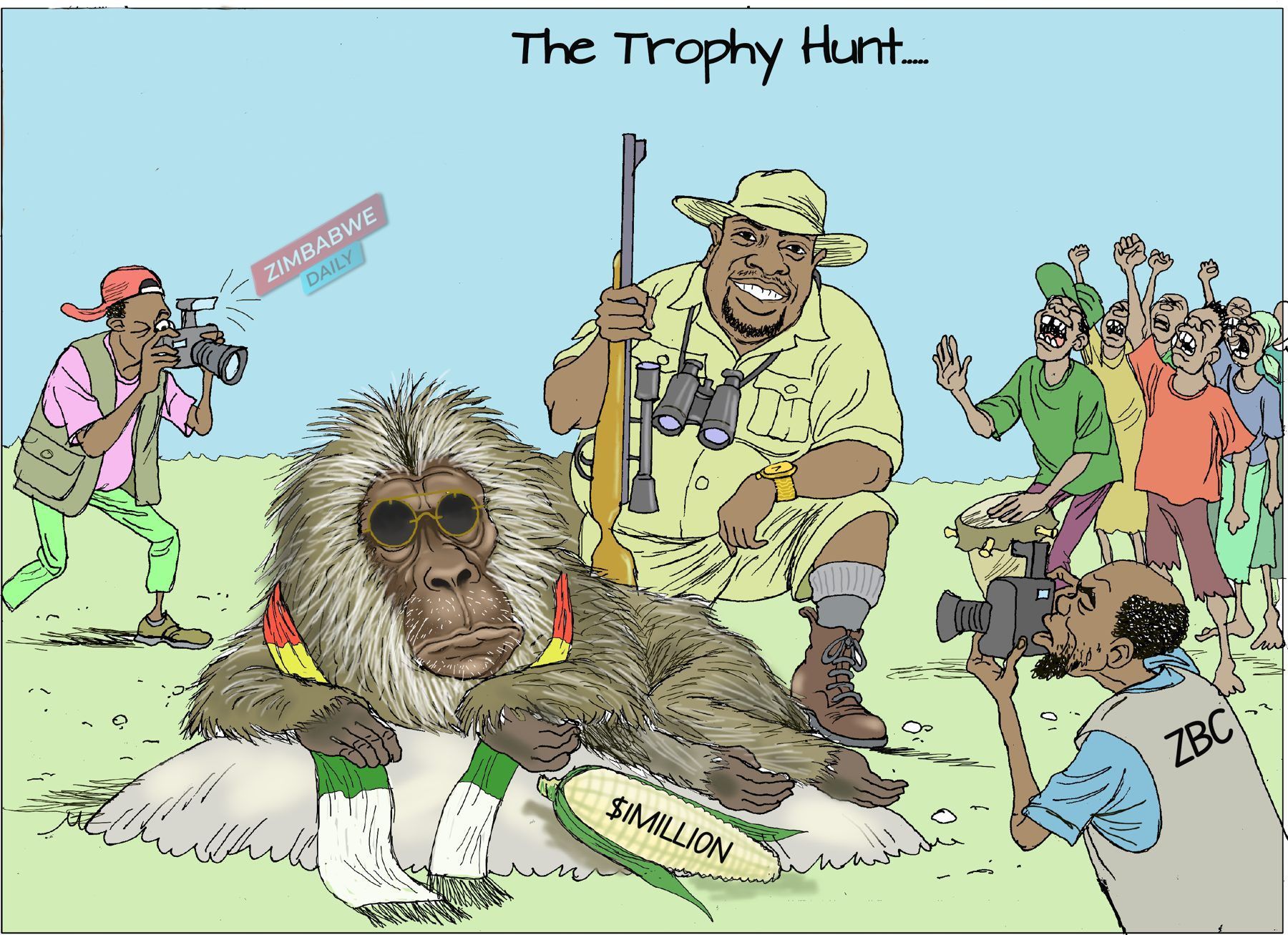
The case was small, but it illustrated a larger problem. Trophy hunting in Zimbabwe operates at the intersection of conservation, politics and money, with politically connected operators accused of controlling access to lucrative hunting concessions.
A 2008 US diplomatic cable, later published by WikiLeaks, described hunting as having “long been a source of ill-gotten revenue for members of the ZANU-PF elite.” The cable, numbered 08HARARE956, alleged that hunting permits “were issued by Parks under intense pressure from its politicized board and ZANU-PF.”
The 2008 cable focused on hunting permits in national parks. Separately, a 2012 Mail & Guardian report examined allegations centred on a land grab at the Save Valley Conservancy in the country’s lowveld. Industry experts said the hunting business brought in about US$30 million each year at that time.
The political backdrop has changed since then. Mnangagwa replaced Mugabe in 2017. But the fundamental questions remain: Who profits from Zimbabwe’s wildlife? Are revenues being properly accounted for? And are the politically connected still using hunting as a cash cow?
ZimParks insists the industry is transparent and sustainable. “We also engage specific governments to provide the necessary information to support hunting and the importation of trophies into those countries,” Mrs Mandisodza said, referring to efforts to address restrictions on trophy imports in the United States and other markets.
The debate is complicated by the fact that Zimbabwe depends on hunting revenue. The US$20 million projection for 2026 represents significant income for a cash-strapped government.