HARARE - Every society produces its own pictures of itself. Ours, this year, has been unusually vivid.
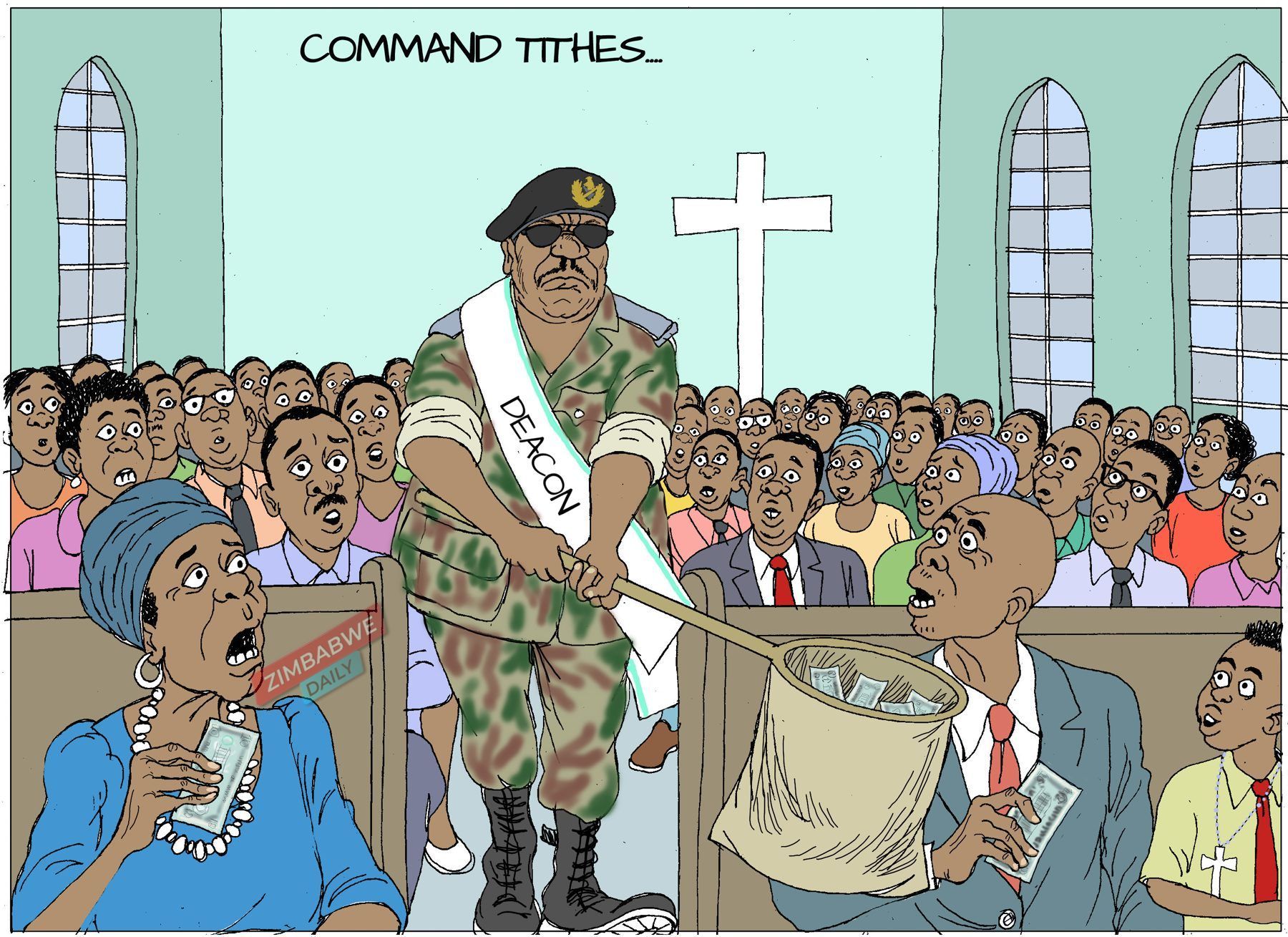
In August, before a packed congregation, the United Family International Church founder Emmanuel Makandiwa displayed US$1 million in cash donated by the businessman Wicknell Chivayo: twenty plastic-wrapped bundles of US$100 notes, Nehanda Radio reported. “This is actually a prophecy. The next bag is coming from you to the altar,” Makandiwa told his flock. “It cannot be that you go to your grave without delivering a million dollars here.”
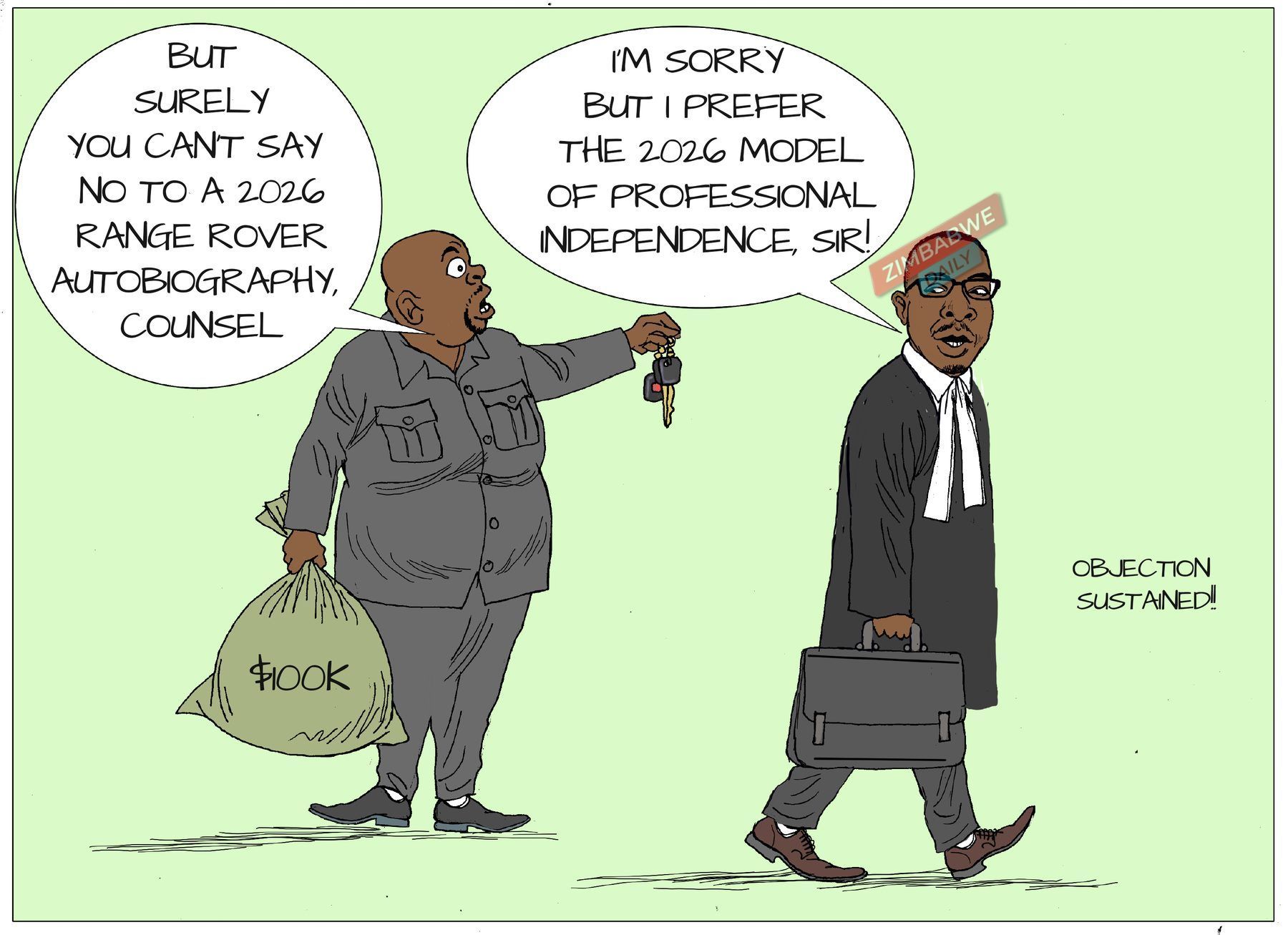
At the end of September, Chivayo announced a new Lexus GX 550 valued at US$220,000, plus US$250,000 in cash, for his longtime lawyer Wilson Manase, and a 2026 Range Rover Sport Autobiography and another US$250,000 for Advocate Sylvester Hashiti, iHarare reported. Hashiti, Chivayo noted, had already received three cars. “I checked and realised there’s no law that restricts wealthy clients from spoiling their lawyers again,” he wrote.
He is right that there is no such law. That is not the same as there being no problem.
The other picture
Now set those numbers beside a different document. The World Bank’s Poverty & Equity Brief for Zimbabwe, dated October 2026, uses the most recent nationally representative consumption survey, from 2019. It found 38.3 percent of the population, about 5.6 million people, below the national food poverty line. Measured against the international extreme poverty line of US$3.00 a day, the figure is 49.2 percent.
The brief adds that Zimbabwe, with a Gini index of 50.3, “was among the most unequal countries globally.” It estimates youth unemployment at about 40 percent in 2025. Over 80 percent of food-poor households, it says, received no social assistance in 2022.
These are not opposition talking points. They are the World Bank’s.
The cliff
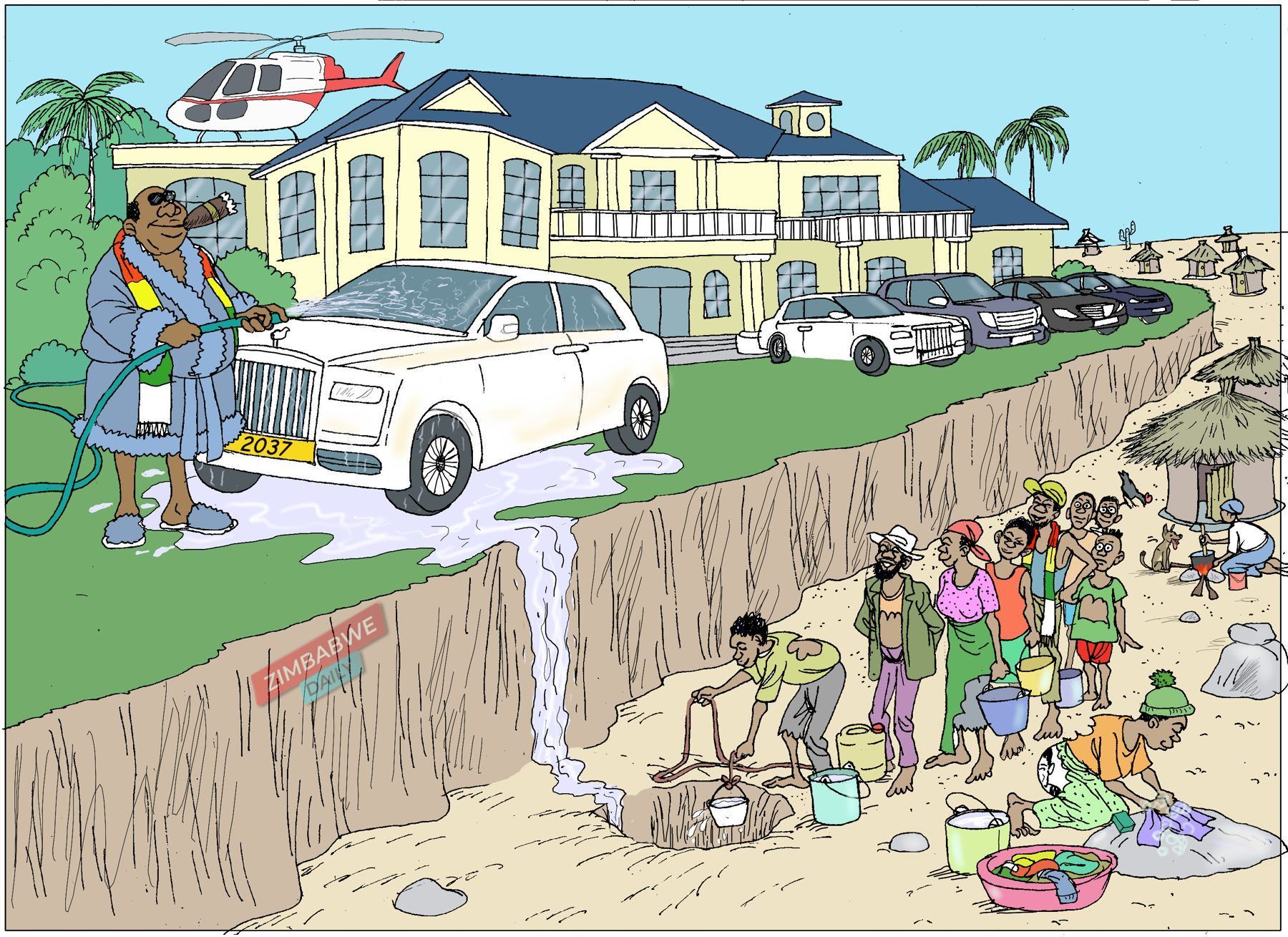
The cartoon at the top of this page draws the gap as geography. On a hilltop, beside a mansion and a parked helicopter, a man in a bathrobe hoses down his Rolls-Royce. The soapy water runs over the cliff edge to a village below, where people dig for water by hand. It is caricature. But it is caricature of a real arithmetic: one lawyer’s “petty cash”, in Chivayo’s own phrase, is US$250,000.
A second cartoon goes further, showing a reclining tycoon being massaged and towelled by attendants labelled ZACC, the police and ZIMRA. That is the cartoonist’s accusation, not a finding of fact. Its point is not about any one man but about who appears to be served.
The fair objection
Chivayo describes his giving as philanthropy and has said that those who decline it are free to do so without ill feeling. It is true that private money, legally earned, may be given away as its owner pleases. Chivayo was acquitted in 2024 of fraud and money laundering charges over the Gwanda solar project, Nehanda Radio has reported.
But public life is not only about legality. When cash is laid out at the altar in shrink-wrapped bundles while a large share of the country lives on a few dollars a day, the spectacle itself says something. It tells young people, among whom the World Bank put unemployment at about 40 percent in 2025, where the money is and how it is reached.
The point
A healthier country would argue less about who got the Range Rover and more about why the bottom of the cliff still has no taps. The World Bank’s brief is free to read. It does not come with a car.