HARARE - In Zimbabwean football, the most-used word after “goal” may be “almost”.
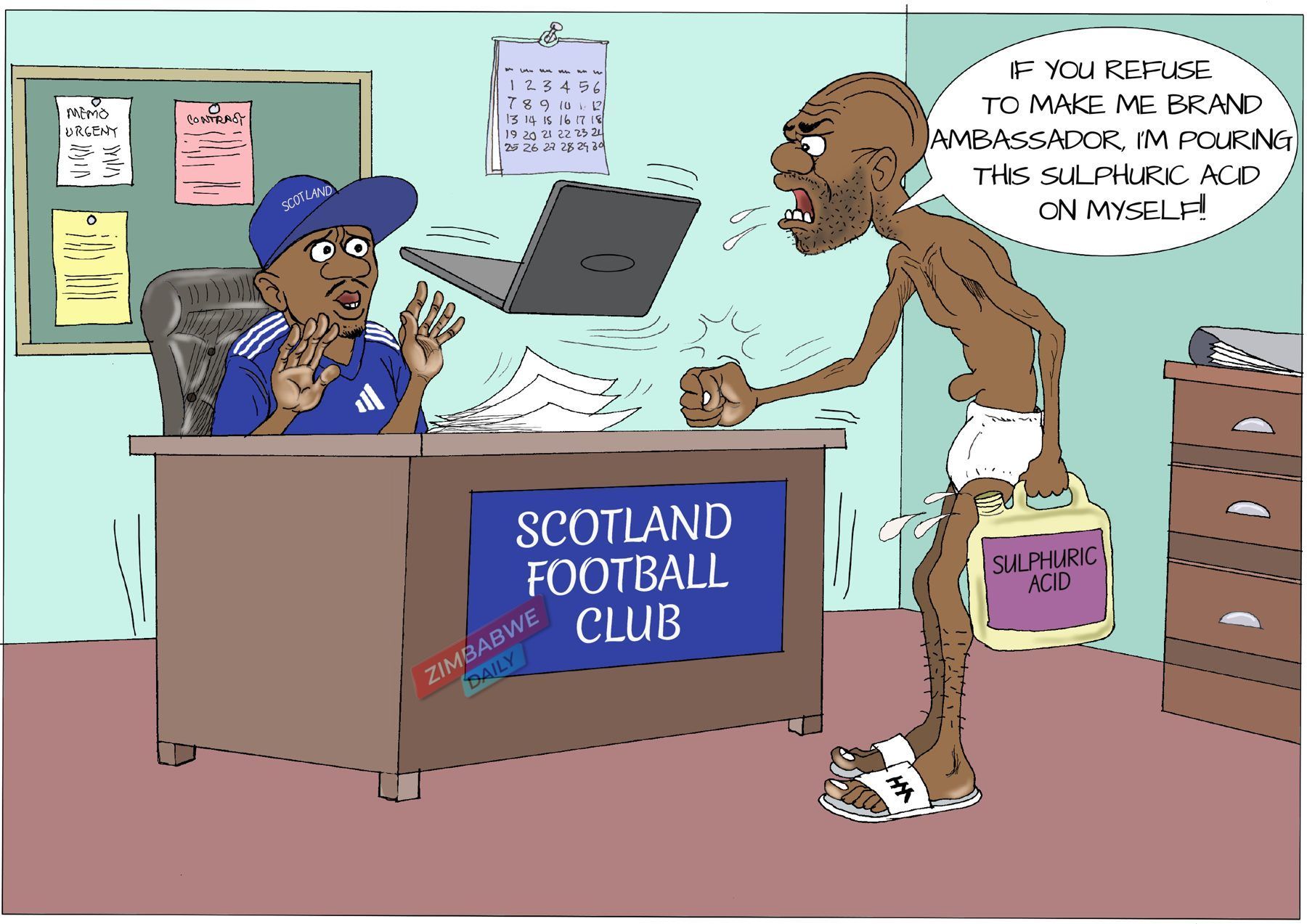
Presenting the 2026 Mid-Term Budget and Economic Review in Parliament on Thursday, Finance Minister Mthuli Ncube told legislators the National Sports Stadium was nearly ready for the world. “The upgrading and refurbishment of the National Sports Stadium to meet FIFA and CAF international standards is almost complete,” he said, according to the Zim Morning Post. “Already, a test match to assess the readiness of National Sports Stadium inspection by FIFA and CAF was played on 31 May 2026 between PSL teams CAPS United and Scottland FC.”
It is five years since the Confederation of African Football barred the stadium from hosting senior international matches. In 2021, the Zim Morning Post noted, inspectors found deficiencies including the lack of bucket seats, electronic turnstiles and a functional Venue Operations Centre.
The inspectors arrive
This week the inspectors came back. New Ziana reported that CAF carried out assessments at the National Sports Stadium earlier in the week, with a separate technical evaluation of the playing surface to follow before CAF issues its final verdict.
On Thursday a three-member CAF delegation, infrastructure expert Alloys Mopambara, safety and security inspector Elloh Claude and pitch specialist David Newell, spent several hours at the newly built Chahwanda Stadium in Kwekwe. The venue was built through a partnership involving businessman Shepherd Chahwanda and Prophet Walter Magaya.
There is a catch in the fine print. If Chahwanda receives the CAF Category 2 certification it is seeking, it could host preliminary rounds of the CAF Champions League and Confederation Cup and youth qualifiers. It could not, New Ziana noted, stage senior Africa Cup of Nations or World Cup qualifiers. For the Warriors, the National Sports Stadium remains the prize.
What has changed
According to New Ziana, government has partnered with Sakunda Holdings on the refurbishment. The list of upgrades reads like the inspectors’ old complaints turned inside out: a new playing surface, modern bucket seats, upgraded dressing rooms, an improved players’ tunnel, enhanced medical facilities, electronic access systems and surveillance infrastructure.
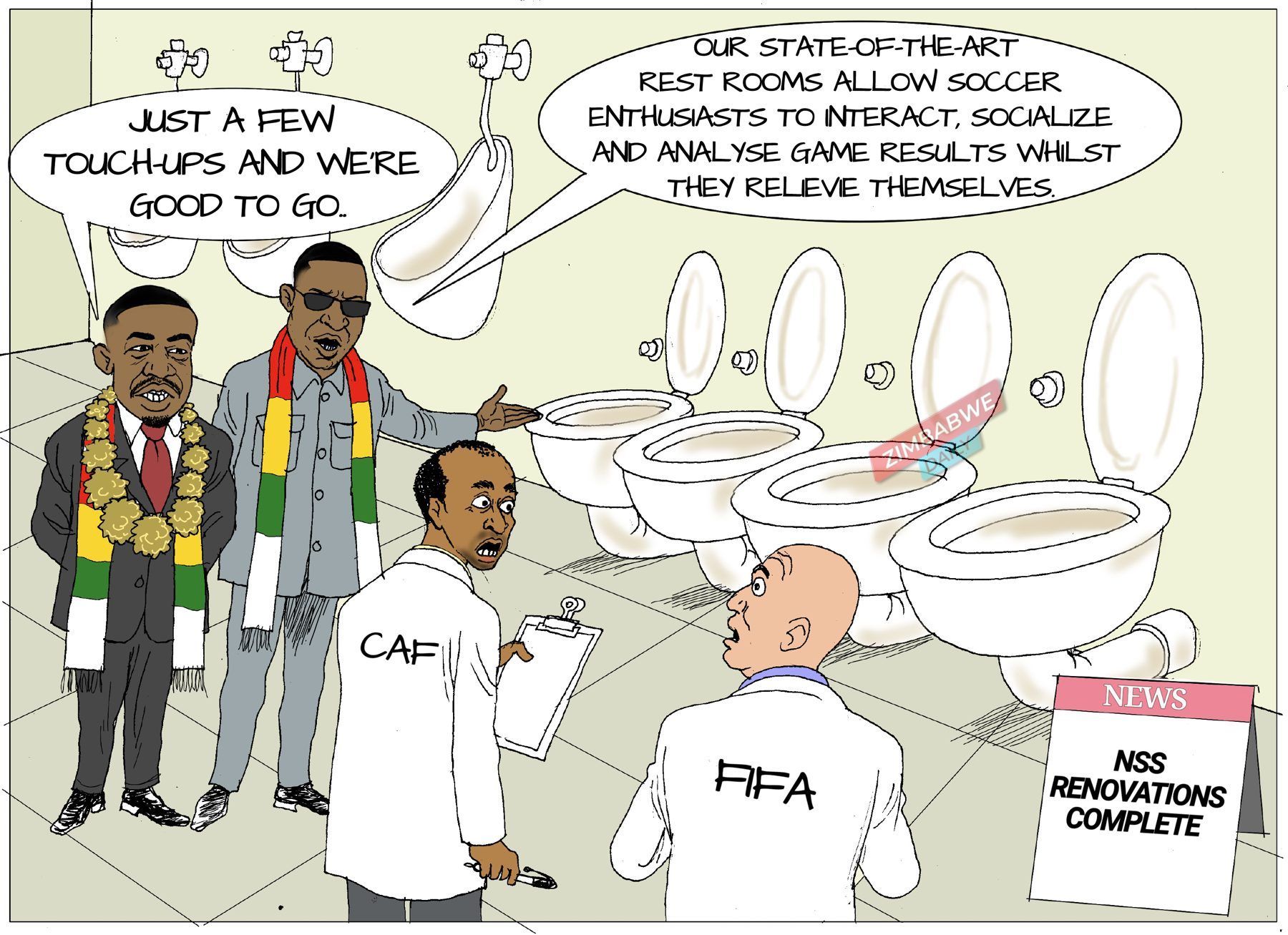
The cartoon accompanying this story imagines the tour from the inspectors’ side, with officials proudly presenting a row of toilets where fans can “analyse game results whilst they relieve themselves”. The official record makes no mention of the bathrooms. Fans who have queued at the old ones will have their own view.
Five years on the road
The cost of the ban has been paid in air miles. In November 2023, with no venue at home, the Warriors hosted Nigeria in a World Cup qualifier at the 10,000-capacity Huye stadium in Rwanda, after ZIFA’s hopes of using Rufaro or the National Sports Stadium were dashed when both failed CAF’s minimum standards. New Ziana lists South Africa and Uganda among the other countries where Zimbabwe has had to stage its home fixtures, at extra cost to ZIFA and with local supporters left at home.
An older cartoon, from October 2023, has two fans on a bench working it out: the national team of “the fastest growing economy in southern Africa” plays its home games abroad “because it doesn’t have a single CAF certified stadium!!” The economic boast belongs to the cartoon. The stadium fact did not need exaggerating.
The verdict to come
The Zim Morning Post, under the headline “Five years on, government makes latest promise”, noted that the renovations have been accompanied by several assurances that the stadium would soon be ready for inspection. This time the inspectors have at least been through the turnstiles.
Ncube also told Parliament the 10,000-seat Mosi-oa-Tunya International Cricket Stadium was on target for completion by December 2026. Cricket fans may want to keep that receipt.
CAF’s ruling on the National Sports Stadium is still to come. Until then, the Warriors’ next home game remains, in the most literal sense, an away fixture.