HARARE - Conversions are usually a matter for churches. Last week Zimbabwe witnessed one in an economist’s office.
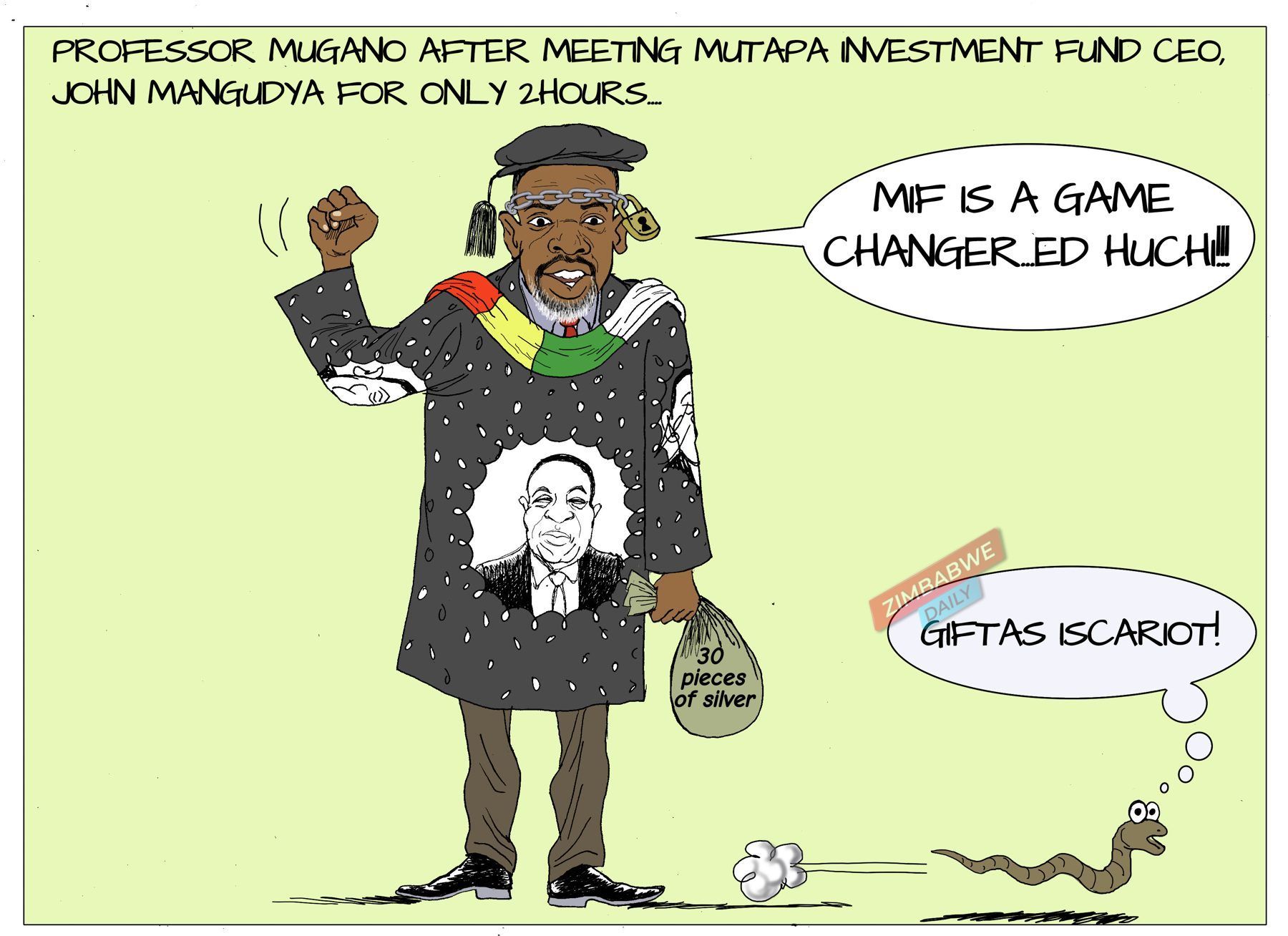
Professor Gift Mugano, an economist known as a critic of government policy, announced after a meeting with John Mangudya, chief executive of the Mutapa Investment Fund (MIF), that he had changed his mind about the state investment fund. “The US$16 billion Mutapa Investment Fund (MIF) is a game changer,” he wrote, in a post reproduced by ZimEye.
“As a person who had initially dismissed the MIF, I went into the meeting as a doubting Thomas but I came out of the meeting as a convinced & converted person,” he wrote. “From today, I can speak and argue with facts on why the MIF is a game changer.” He signed off: “MIF you have earned an ambassador.”
What he was shown
The meeting lasted two hours. Mugano said he had arrived as a curious “student” with questions about governance, why the state chose an investment fund rather than a resource-based fund, and the MIF’s relevance to the economy.
Mangudya, a former central bank governor, showed him the fund’s five-year strategic plan, which goes by the acronym FIRE: Fix, Invigorate, Reinforce and Extract. According to Mugano, the plan sorts the 30 entities under the fund into four groups: cash cows, stars, dogs and question marks. Among its aims, he wrote, is to restore “the 1996 glory where SOEs contributed 25% of GDP” and to build a stabilisation fund.
The doubters stay doubtful
Not every economist was persuaded. Chenayi Mutambasere, responding to Mugano, questioned the fund’s relevance to national budgeting, Nehanda Radio reported. “The whole point of the Mutapa Fund is to unlock revenue, yet we are still relying on consumption taxes. Where is the revenue from this so-called US$16 billion asset?” she asked. “We are taxing informal traders who make a dollar a day selling maputi, while a multi-billion-dollar state entity pays nothing. How is that justifiable?”
She also challenged the description itself. “It is misleading to call the MIF a game changer when it is heavily geared,” she said. “Its growth has been financed through borrowing; more than US$3 billion has been added to public debt, including the US$1.6 billion Kuvimba acquisition.”
Fadzayi Mahere, the former Mt Pleasant MP, repeated her concerns about secrecy. The fund, she said, “operates opaquely, managing millions in state assets with zero accountability,” adding: “It does not report to Parliament, all key appointments are made solely by the President, and employees are sworn to secrecy.” She warned that its exemption from public procurement laws exposed the entities it controls “to abuse through corrupt contracts”.
Nehanda Radio noted that there is no publicly confirmed valuation of the fund’s assets, and that parliamentary attempts to obtain clarity have been unsuccessful.
The cartoon’s sharper tongue
The cartoon accompanying this story is merciless. It shows a robed professor proclaiming the fund a game changer, a bag marked “30 pieces of silver” at his side, while a snake wonders aloud about “Giftas Iscariot”. That is the cartoonist’s jibe and it is a harsh one. Nothing in the reporting suggests Mugano was offered or received anything; his own account is that he was persuaded by a strategy document over two hours. ZimDaily reproduces the cartoon as commentary on the speed of the conversion, not as an allegation.
Postscript: the gold
Seven months later the conversation about state mineral wealth had moved underground. In July 2026, Mines Minister Polite Kambamura said the government was intensifying its fight against gold smuggling and mineral leakages to build reserves and support the ZiG. “We are currently going around the country, monitoring every mining operation to ensure that there are no leakages, minimise gold smuggling and so forth, in efforts to build our gold reserves as Government,” he said, according to ZiFM Stereo. Authorities had shut down 22 mines in a compliance blitz.
A cartoon of that announcement shows a notice nailed to a tree declaring war on gold smuggling and a troop of baboons collapsing in laughter. Whether the fund, the minister or the baboons have the last laugh may depend on a set of accounts that, so far, the public has not seen.