HARARE - There was no ceremony to speak of, no brass band and no ribbon. One of the most significant constitutional changes since the adoption of the 2013 Constitution, as The Anchor put it, arrived the way most bad news does in this country: in the small print of an Extraordinary Government Gazette.
President Emmerson Mnangagwa has assented to the Constitution of Zimbabwe Amendment (No. 3) Bill, which is now law as the Constitution of Zimbabwe (Amendment) Act (No. 3), 2026, or Act 6 of 2026. ZimLII, the national legal information database, records the Act as dated 7 July 2026 and published that day in Government Gazette Extraordinary 48.
The announcement was made by the Chief Secretary to the President and Cabinet, Dr Martin Rushwaya, according to The Herald, which said the law “marks a historical moment for the country’s constitutional democracy and legal jurisprudence.”
Whatever one makes of that, the practical changes are considerable.
What the Act does
The Act extends the terms of office for the President, Parliament and local authorities from five to seven years, The Anchor reported. It also changes how Zimbabwe chooses its head of state. The President will no longer be elected by direct public vote but by Parliament, which will sit as an electoral college after a general election.
Voter registration and the management of the voters’ roll move from the Zimbabwe Electoral Commission to the Registrar-General. A new Delimitation Commission will take over the review of constituency boundaries, a job that ZEC used to do. The National Peace and Reconciliation Commission is abolished, the Senate grows from 80 to 90 members, and, according to The Herald, the Judicial Service Commission is removed from the process of appointing the Prosecutor General.
In short, the electorate keeps its vote for Parliament, and Parliament keeps the vote for everything else.
How it got here
The Bill was gazetted in February and went through Parliament’s mandatory 90-day period for public representations, followed by countrywide hearings. Justice, Legal and Parliamentary Affairs Minister Ziyambi Ziyambi steered it through both chambers.
The numbers were never in doubt. When the Bill was first put to the National Assembly, it secured 216 votes, 29 more than the two-thirds majority needed to amend the Constitution, The Herald reported, with 42 members of the CCC voting against. The Senate passed it by 75 votes to four. After the Senate’s amendments, the Bill went back to the lower house, where 226 legislators voted for it and 41 against.
To get there in time, Parliament suspended its own Standing Orders, including the automatic 6:55pm adjournment, and legislators sat until midnight and, on some occasions, on Fridays.
There were concessions along the way. Minister Ziyambi withdrew a clause that would have conferred political rights on traditional leaders, and dropped a proposal to disband the Zimbabwe Gender Commission.
The view from the cheap seats
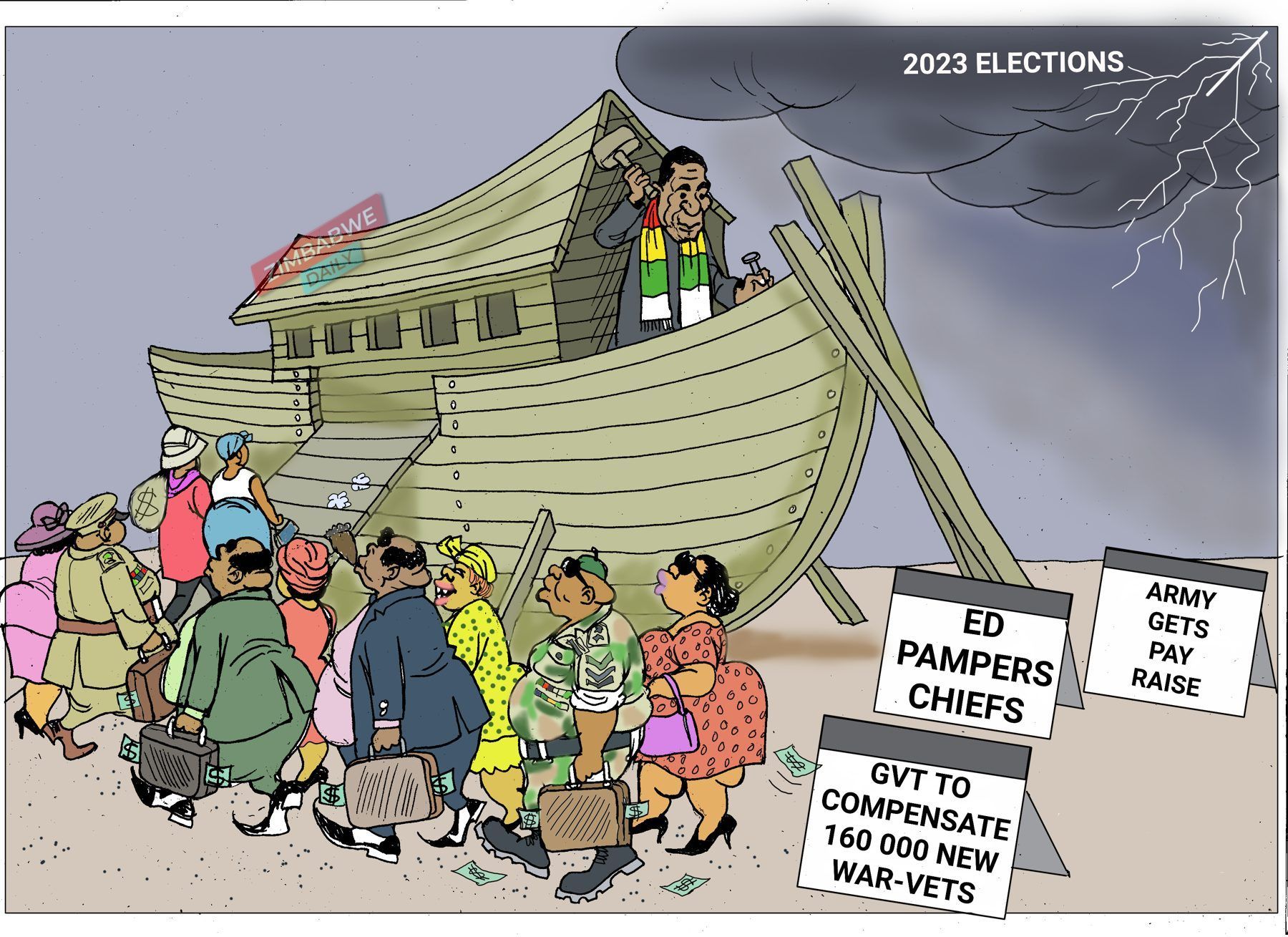
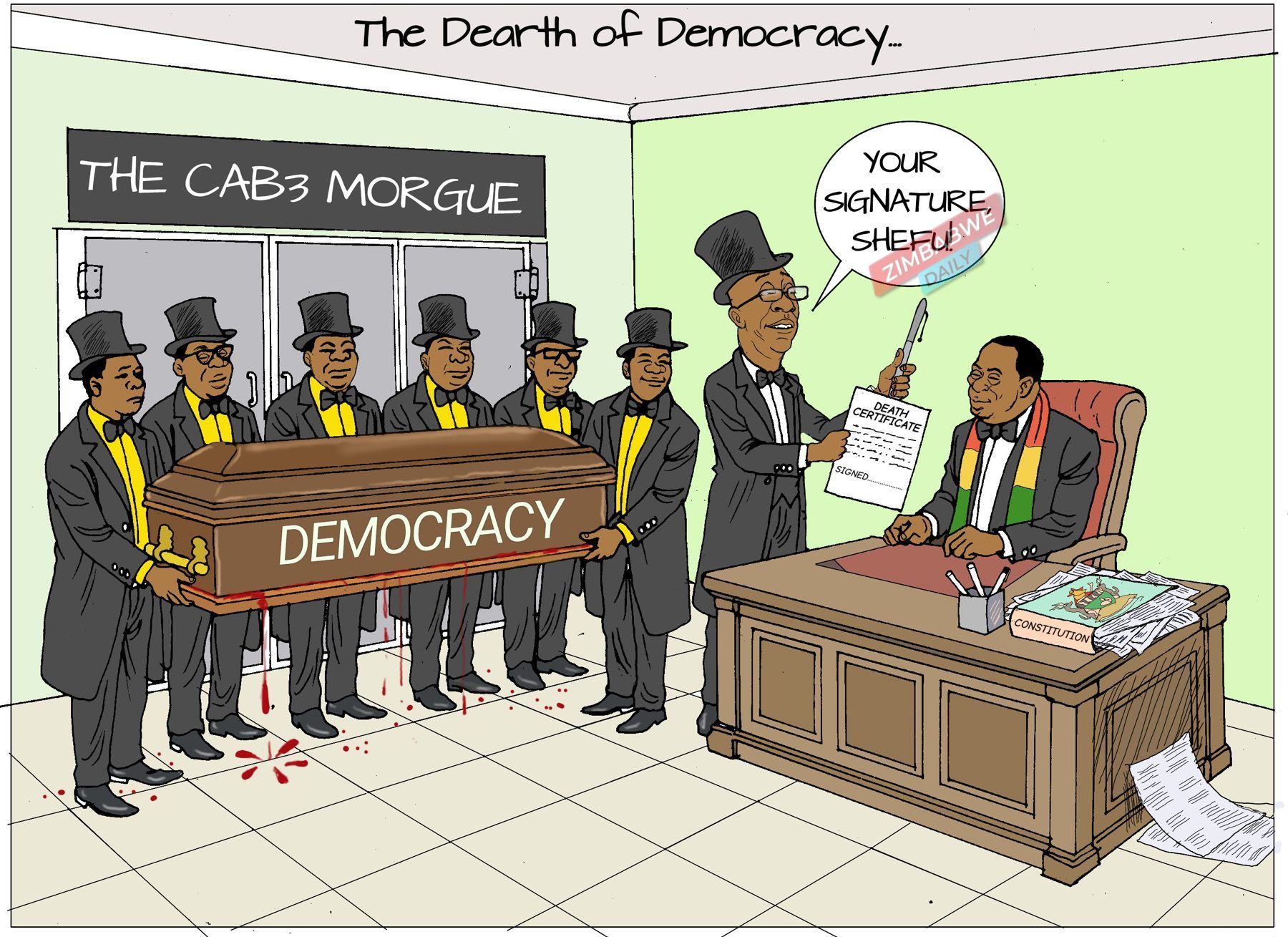
The cartoons that have tracked the Bill this month have been less respectful than the Gazette. One shows pallbearers carrying a coffin marked DEMOCRACY into a building labelled “The CAB3 Morgue”, seeking only a signature. Another shows a television reporting the signing as the viewer’s phone pings with a renewed “poverty bundle”. A third imagines the news on social media, outscored by celebrity gossip by roughly twenty thousand likes to one.
That last image is commentary, not a statistic. But it captures a real problem for anyone hoping to explain why a technical amendment to term lengths and electoral colleges matters to a household budgeting for bread.
The answer is that the new arithmetic touches every vote cast in the next election, and the one after it. The terms are longer. The president is chosen by MPs. The roll is kept by a different office.
As The Herald notes, the President’s assent means the provisions of the Act now begin to take effect. The Gazette has spoken, and it did so in a font size that suits the occasion.