HARARE - There is a particular Zimbabwean compliment that is really a warning. We are told we are resilient. It usually means someone is about to add to the load.
The Constitution of Zimbabwe Amendment (No. 3) Act, 2026, which replaces the direct election of the President with a vote by a joint sitting of Parliament and extends terms of office, is barely dry. Already, the conversation has moved on.
The next sack
In July, at a thank-you rally for the amendment in Zaka, ZANU PF’s Masvingo provincial chairperson Robson Mavhenyengwa said the province wanted President Emmerson Mnangagwa to remain in office beyond 2030. “The President has done exceedingly well for this country, so why should we remove him after doing all this good?” he asked, according to The Midweek Watch, as carried by Pindula News.
The same day, Harare provincial chairperson Godwills Masimirembwa said the province wanted Mnangagwa to lead the party from 2030 to 2037. “So we still want him for an additional seven years, from 2030 to 2037. He must lead the party. That is what Harare is saying,” he said.
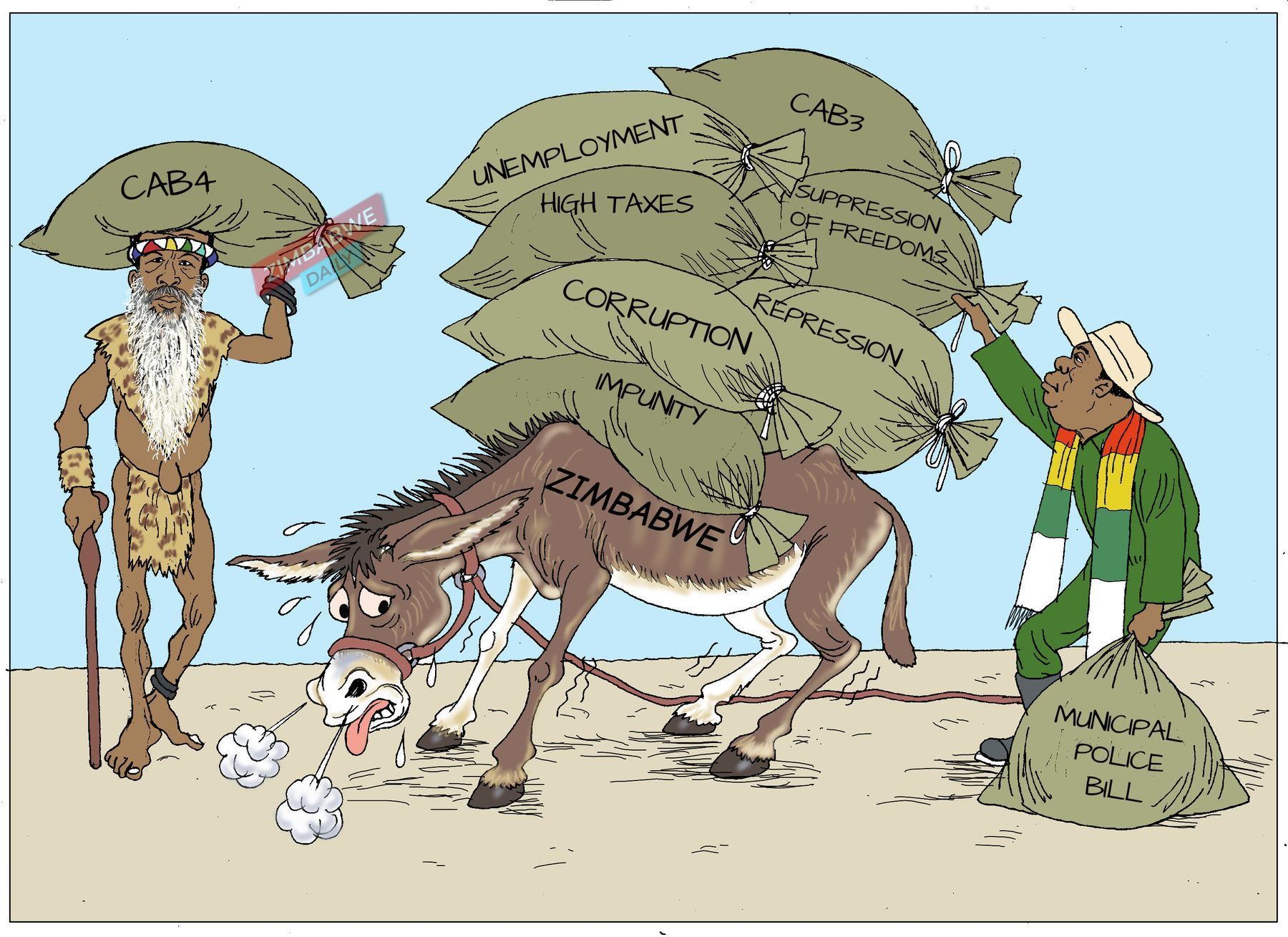
Masvingo’s Minister of State, Ezra Chadzamira, went further, saying Mnangagwa “should lead the nation until donkeys grow horns, if that is possible.” The donkey, it seems, was always going to feature in this story.
Then the author Joshua Maponga proposed what he called CAB4, to turn Zimbabwe into a monarchy with Mnangagwa as its first king. “Zimbabwe again will lead the way to become the first African state to break away from democracy back into monarchy,” he said, according to Pindula News. No such bill has been introduced in Parliament, Humanitarian Post noted. CAB4 is, for now, a name and an appetite.
The reply
Tendai Biti, the former Finance Minister, answered on X. The proposal, he wrote, “signifies the death of ZANU-PF, the death of common sense and the death of the Republic.” He added: “The biggest fight now on our hands is defence of the Republic. Nothing more. Nothing less.”
One need not share Biti’s politics to share his alarm. A constitution is supposed to be the one thing that does not change to suit whoever holds power. Ours has changed once this year, and its custodians are already sketching the next draft.
The rest of the load
The cartoon at the top of this page piles the sacks on a donkey marked “Zimbabwe”: unemployment, high taxes, corruption, CAB3 and CAB4, with an official cheerfully lifting one more. It is a cartoon, so the weights are not to scale. But some of them can be measured.
On taxes, Techzim reported in April that the government had recently introduced a Digital Services Withholding Tax, which it said levies 15.5 percent on almost all online payments. The same month, the revenue authority invited people earning from online platforms, renting out property, running taxis or trading gold to come forward and disclose undeclared income. These are not the habits of a state that thinks its citizens are under-burdened.
The frog
The second cartoon is the one I cannot stop looking at. “Zimbabweans: built for extreme conditions,” it says, and shows a frog on a hotplate as the dial goes from 1 to 6. At first the frog is calm. By the last panel it is cooking.
The old fable says a frog in slowly heating water will not jump. Whether that is true of citizens is the question of this political season. Each amendment, each new levy, each provincial resolution is presented as a small step. None, on its own, is the boiling point.
The point
Mavhenyengwa says the President should be rewarded for his performance. Maponga says democracy does not suit Africa. Biti says the Republic itself is at stake. Zimbabweans are entitled to weigh these views for themselves.
But the people carrying the sacks deserve to be asked before another is added. A donkey cannot vote. A citizen still can, for a Parliament that will now choose the President.