HARARE - Let it be recorded, for the benefit of historians and the Ethiopian Airlines social media team, that the Zimbabwean citizen is not apathetic. The Zimbabwean citizen is merely selective.
Give him a lost suitcase and he becomes a general. Give him a dead tycoon’s missing Instagram photographs and he becomes a constitutional lawyer. Give him a tap that has not run since the rainy season and he becomes, quite suddenly, a monk.
The campaign of the suitcase
The facts of the great July campaign are not in dispute. On 17 July, Nehanda Radio reported that the jiti musician Baba Harare had appealed to Ethiopian Airlines to trace luggage that went missing on his journey from the United Kingdom. The bag, he said, held filming equipment and outfits for the launch of his album Pedzai Navo on 1 August.
What followed was a mobilisation that any opposition party would sell a kidney for. Thousands of young Zimbabweans flooded the airline’s social media pages with hashtags and comment campaigns, NewsDay reported. Baba Harare went further and accused the airline of deleting comments from his supporters, whom he calls the “Jiti family”, arguing that customer concerns deserved engagement rather than moderation. By the same day, ZiFM Stereo News was reporting that the bag had been found.
“Hanzi bhegi renyika rawanikwa,” he told his followers. The nation’s bag had been found. One notes the phrasing. Not his bag. The nation’s bag. Zimbabwe has lost a great many things of national significance over the years, and this is the first one in living memory to be returned.
When it landed at Robert Gabriel Mugabe International Airport, he thanked the Jiti family for their love and support. It was, by any measure, a triumph of collective action.
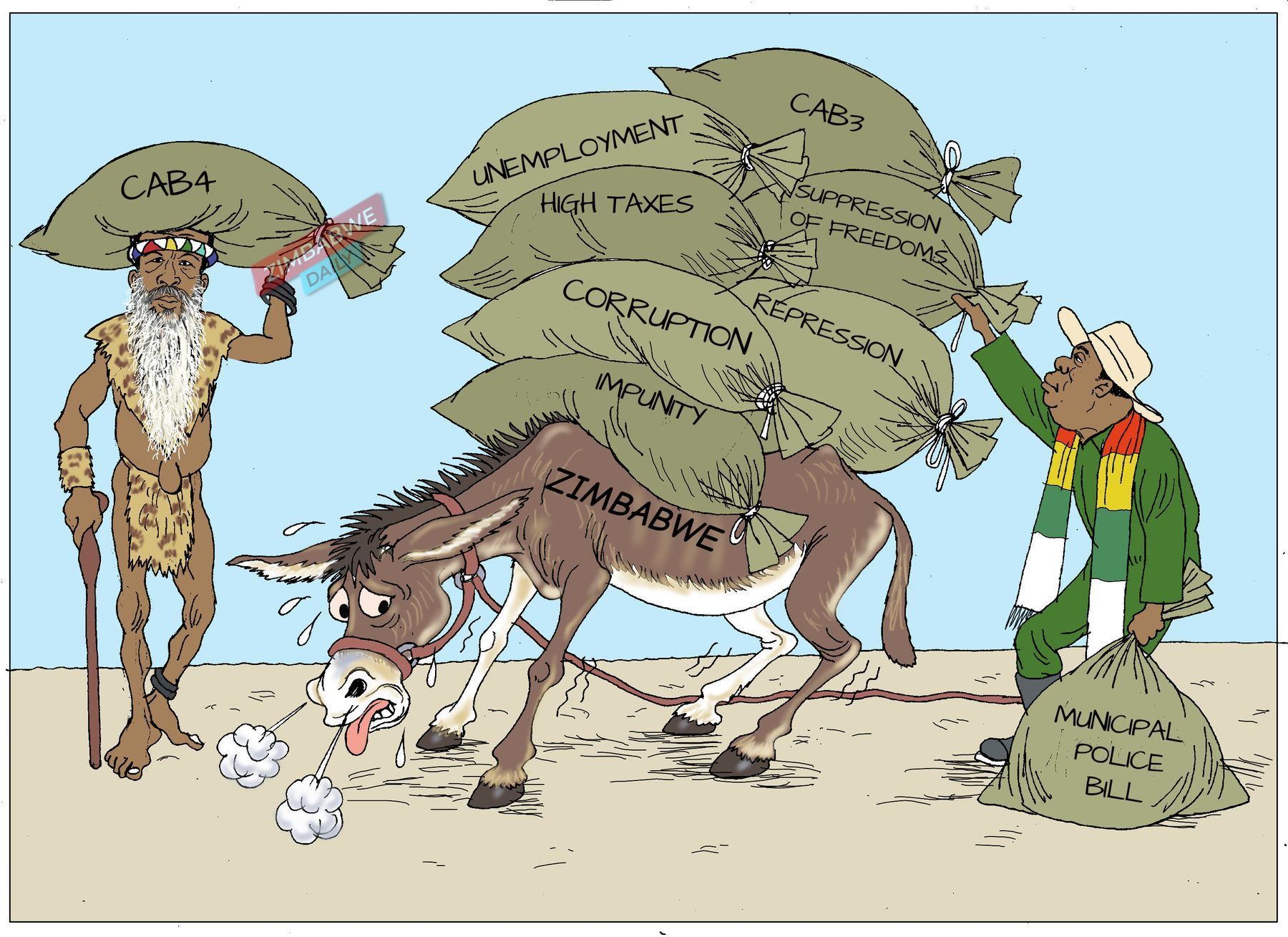
It was also, as the constitutional lawyer Lovemore Madhuku pointed out at the time, a triumph that arrived in the same season as Constitutional Amendment Bill No. 3, which NewsDay described as extending presidential and parliamentary terms, altering electoral provisions and removing public interviews for senior judges. The suitcase got thousands of comments. The Constitution got a shrug. Madhuku said the energy of the Baba Harare campaign could, if properly organised, be turned to political issues. The analyst Rashweat Mukundu offered a less flattering and more honest explanation: fear. An airline, after all, does not have a CIO.
The campaign of the watches
Then, in the first days of October, the nation found a fresh grievance in Geneva.
Wicknell Chivayo and his wife Lucy died in a helicopter crash near Marondera on 30 September. Within a day, Briefly News reported, the Swiss watchmaker Jacob & Co had quietly removed Instagram posts linked to him. This was the same house that had hosted him in Geneva in July, where, by the same report, he spent about US$4.3 million on timepieces, including a Billionaire Double Tourbillon priced at US$3.4 million. In September, Kenyan Post reported, founder Jacob Arabo had presented him with the first Godfather II watch, engraved WMC 777, and called him a “good friend”.
The outrage was immediate and continental. “Something smells fishy; why remove any links? They knew he was bad for business, but they still accepted his money,” one user wrote, as quoted by Briefly News. Others had a less sentimental theory. A resurfaced clip from Geneva, Briefly reported, showed Chivayo talking about finishing payments months later, and one X user suggested that explained the deletions. The company has not explained anything. By 3 October, posts on X reported that some of the photographs appeared to have been restored.
So let us take stock. A people with no shortage of their own unpaid bills spent a week defending the dignity of a man’s Instagram grid before a jeweller who owes them nothing, on behalf of a man whose Gwanda solar advance, by his own brother’s account at the burial, was not exactly a model of delivery. Loyalty is a virtue. Loyalty to a watch catalogue is something else.
The counters nobody visits
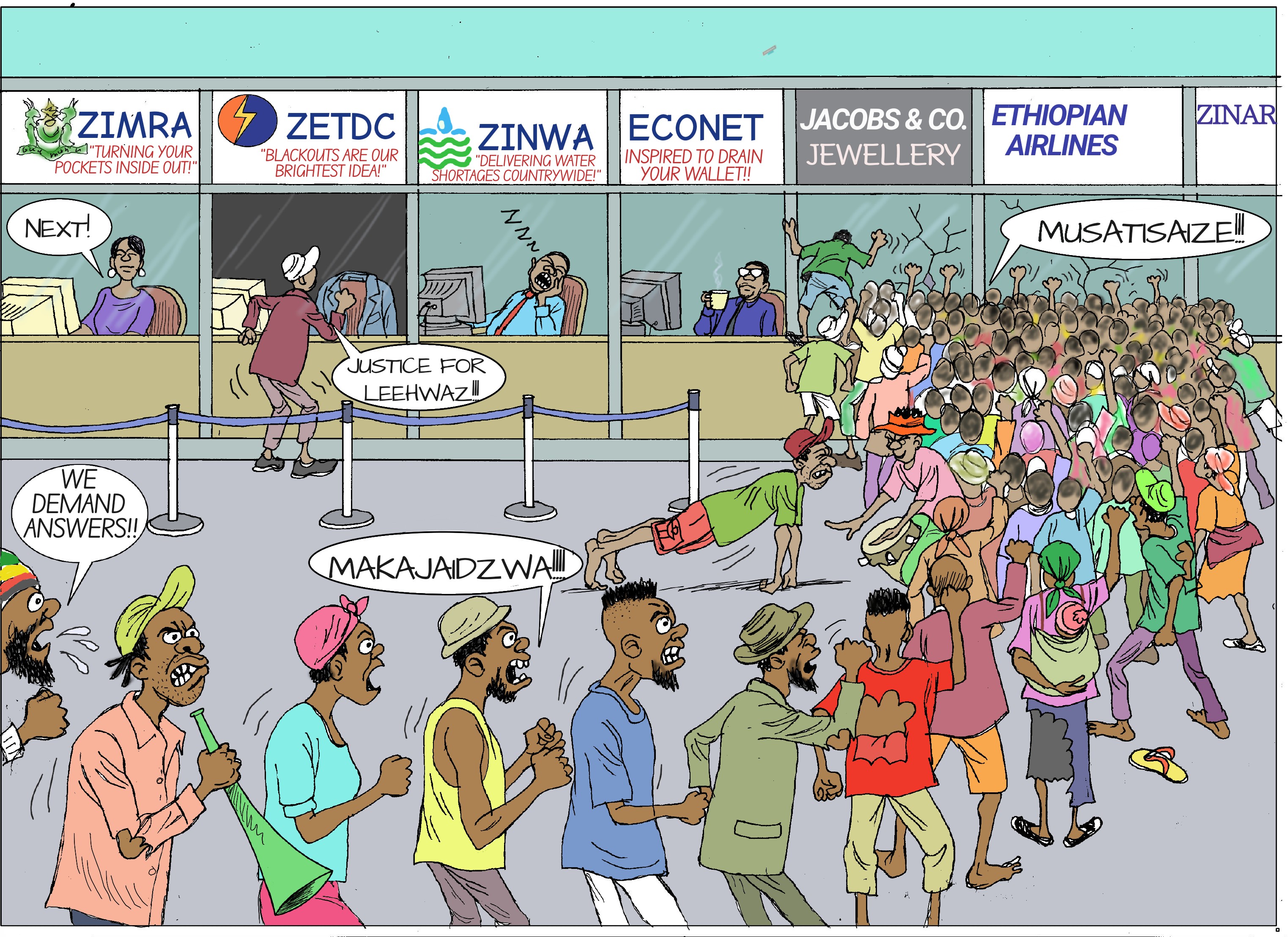
Now walk down the hall, past the velvet rope and the crowd, to the windows where the actual business of Zimbabwean life is transacted. There is no queue. There is barely a pulse.
The tax office. Fairness requires the record to show that the Zimbabwe Revenue Authority has lately written to the Borrowdale Brooke homeowners association for details of owners and tenants under Section 39 of the Income Tax Act, as Daily News reported in August. ZimEye reported that 25 of those properties are said to be linked to Finance Permanent Secretary George Guvamatanga, while stressing that no finding of wrongdoing has been made against him. He has long said his wealth predates government. Good. Let it be tested. But the citizen who wrote forty comments under an airline post has a longer memory than that. The NewsHawks reported in 2021 that whistle-blowers accused ZIMRA of dropping, after nearly a decade, a probe into US$680 million in transactions by a BancABC-linked company, Second Nominees, and alleged that officials had been compromised by loans. ZIMRA did not respond to the paper. Not one hashtag was harmed in the making of that story.
The anti-corruption commission. ZACC told the nation in September that from January to August it received 517 reports, made 195 arrests and won 90 convictions from 128 finalised cases, a 70 percent conviction rate. Its asset forfeitures, New Ziana reported, included 14 vehicles, a residential stand and cash. In a country whose own anti-graft debate is conducted in billions, the haul is fourteen cars. And yet ZACC’s comment section remains as tranquil as a Sunday in Gweru.
The water authority. In August, residents of the mining town of Mashava told ZINWA, at a meeting of about 40 people at Bere Community Hall, that they had gone up to five months without running water while still being billed, the Masvingo Mirror reported. One resident described families drinking rainwater off their roofs, “contaminated with worms”. Another said: “ZINWA, be serious, we clock five months without water.” Forty people. In a hall. Baba Harare’s bag had more representation at the Addis Ababa transfer desk.
The power company. Here an honest columnist must give the devil his due. The energy regulator recorded 213 days without load shedding by 27 July, according to Bulawayo Pulse. But the grid still fails, and when it does the citizen is advised to treat all circuits as live, because power may return without notice. After a hailstorm on 5 October, Pindula reported, parts of Masvingo Urban, Mashava and Gutu were still without power days later. Mashava, you will note, again. A town that cannot get water or electricity has clearly not lost enough luggage.
The roads. ZINARA, The Herald reported, released ZWG4.6 billion, about US$175.5 million, to road authorities in the first half of the year, 47.1 percent of a US$363 million budget. The Ministry of Transport’s answer to the potholes that remain was to publish a list of provincial engineers’ mobile numbers in January and invite the public to send photographs. The state has, in other words, given the citizen a hotline, a pothole map and a reporting app. It has asked, nearly begged, to be flooded with complaints. Not a single hashtag has trended.
The verdict
The defence will say, with some justice, that this is unfair. The airline cannot arrest you. The jeweller does not know where you live. Mukundu’s diagnosis of fear is not cowardice; it is memory. A man who has watched activists arrested and assaulted may reasonably prefer to fight a battle in which the worst outcome is a deleted comment.
But that defence explains only the silence on the dangerous things. It does not explain the silence on Mashava’s taps, which no one has ever been abducted for mentioning, or on ZACC’s fourteen cars, or on a pothole whose engineer has published his own number. Those are not dangerous. They are merely boring. And there, finally, is the indictment. The nation is not afraid of its state. It is bored by it.
The evidence before this court is that Zimbabweans can locate a single suitcase across three countries in under a week. Imagine, for a moment, what they might find if they went looking for the country’s money.
About the writer: Nkosana Sibanda writes opinion for ZimDaily from Harare, on citizens, the state and the distance between them.